


In warehouse operations, few processes have as much impact on cost and efficiency as order picking. It directly affects how quickly orders move out the door and how accurately they reach customers.
With picking activities accounting for a significant portion of warehouse labor, even small inefficiencies can quickly add up.
Key Takeaways
- Order picking is a main expense in warehouse operations, heavily influencing customer satisfaction and corporate profitability, with various strategies like single order, batch, and zone picking being pivotal for efficiency and scalability.
- Advanced picking methods and combining strategies, such as wave picking and zone-batch-wave picking, add sophistication to warehouse processes, helping businesses handle modern logistics demands and improve workflow optimization.
- Automation and smart picking tools revolutionize the order picking process by boosting efficiency and accuracy, with automation including voice picking systems and mobile scanners, while adherence to best practices ensures streamlined operations for enhanced productivity.
Table of Contents
- What Is Order Picking?
- Why Is Order Picking Important?
- How Does the Order Picking Process Work?
- Common Order Picking Methods
- Advanced Picking Methods
- Order Picking in Wholesale Distribution
- How Can Order Picking Be Optimized?
- The Role of Technology in Order Picking
- Mobile Scanner Picking
- Best Practices for Efficient Order Picking
- How Does Order Picking Impact Costs?
- In Summary
- Frequently Asked Questions
- OIS Inventory: Conquer Order Picking with Speed and Accuracy
What Is Order Picking?
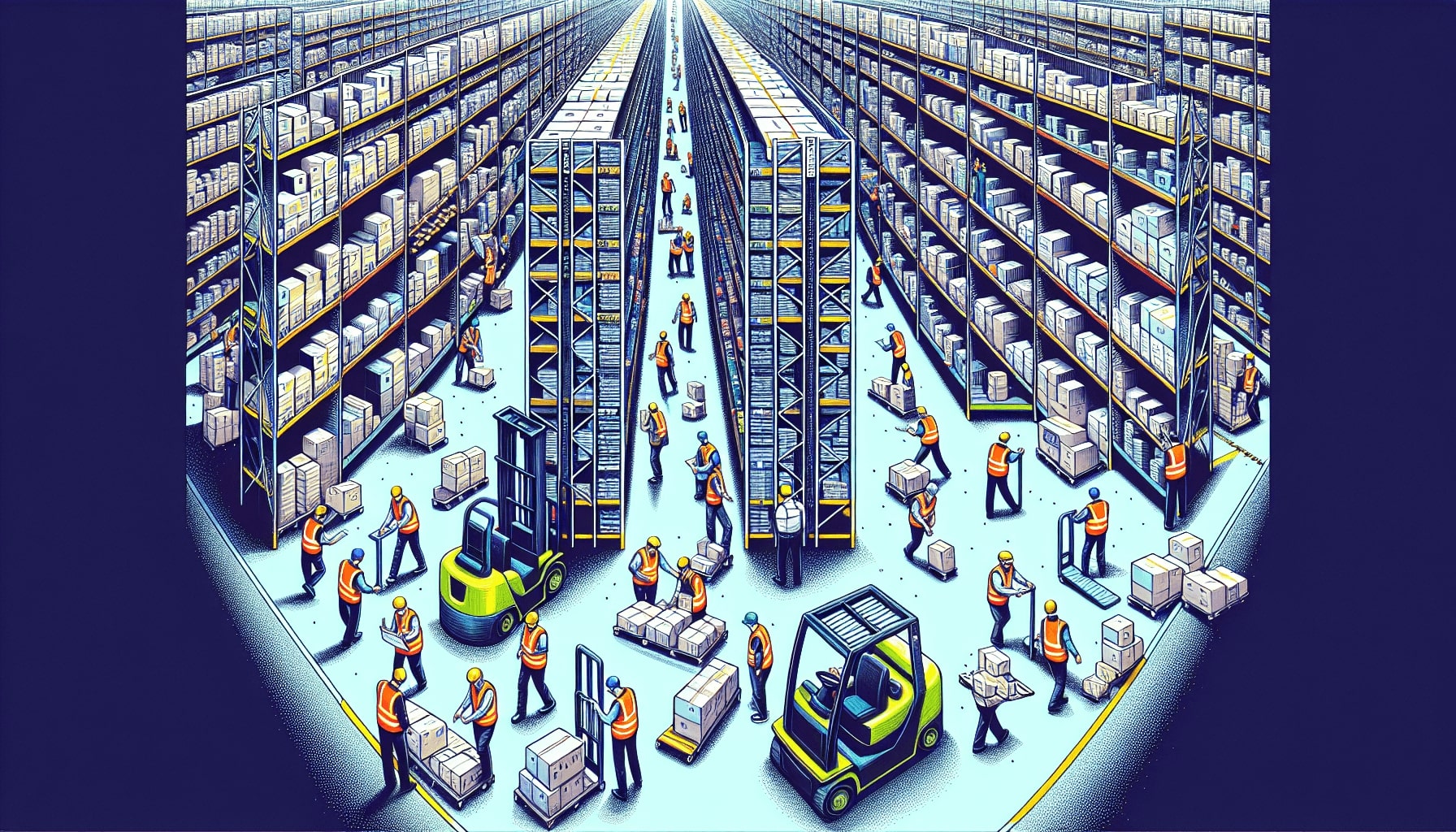
Order picking is the process of retrieving products from a warehouse to fulfill customer orders.
It involves locating items, collecting them, and preparing them for packing and shipping. This step plays a key role in how quickly and accurately orders are fulfilled.

Why Is Order Picking Important?

Order picking directly affects both efficiency and costs.
In many warehouses, it can account for up to 63% of total operating expenses, making it one of the most resource-intensive activities.
When picking is inefficient, it leads to delays, incorrect orders, and higher labor costs—all of which impact overall performance.
How Does the Order Picking Process Work?

The process typically follows a structured flow:
- A customer order is received
- A pick list is generated
- Warehouse staff locate the items
- Items are picked and verified
- Orders move to packing and shipping
Each step must be accurate to ensure orders are fulfilled correctly.
Common Order Picking Methods
Different picking methods are used depending on the operation.
Single Order Picking
Items are picked one order at a time. This method is simple and works well for smaller operations or low order volumes where accuracy is the priority.
Batch Picking
Multiple orders are picked at the same time, typically by grouping common items. This helps reduce travel time and improves efficiency.
Zone Picking
The warehouse is divided into zones, and each worker is assigned to a specific area. Orders move through zones until all items are collected.
Advanced Picking Methods

As operations grow, more structured approaches are used to handle higher volumes.
Wave Picking
Orders are grouped into scheduled time windows, helping align picking with packing and shipping schedules.
Case and Pallet Picking
Instead of picking individual items, workers pick full cases or entire pallets. This is commonly used when handling bulk quantities.
If mistakes are holding back your wholesale business, download our free eBook “Avoid the Top 5 Mistakes Wholesale Distributors Make” and discover key strategies to optimize your operations for success!

Avoid the Top 5 Mistakes Wholesale Distributors Make
Order Picking in Wholesale Distribution

In wholesale distribution, order picking becomes more complex due to larger product catalogs, higher order volumes, and tighter delivery timelines.
Operations often involve repeated SKUs across multiple orders, which makes efficiency critical. Small inefficiencies—like extra walking time or picking errors—can quickly scale into significant costs.
Because of this, distributors rely on structured picking methods and real-time inventory visibility to keep operations running smoothly. The goal is not just to pick orders, but to do so consistently, accurately, and at scale.
How Can Order Picking Be Optimized?
Improving order picking focuses on reducing movement and increasing accuracy.
Common strategies include:
- Organizing warehouse layout based on product demand
- Reducing travel time between picks
- Combining picking methods to improve efficiency
- Using systems that guide pickers through tasks
These changes help process more orders in less time.
The Role of Technology in Order Picking
Technology plays a central role in improving how order picking is executed, not just by reducing manual work, but by guiding and validating each step of the process.
Modern warehouse systems connect inventory data, order information, and picking workflows into one system. Instead of relying on paper pick lists or memory, pickers receive digital instructions that tell them exactly what to pick, where to find it, and in what sequence.
These systems typically:
- Provide real-time inventory visibility, so pickers know what is available and where it is located before they begin
- Optimize picking routes, reducing unnecessary walking time across the warehouse
- Guide pickers step-by-step, often through mobile devices or scanners that display item locations and quantities
- Validate each pick using barcode scanning, ensuring the correct product is selected before moving on
- Update inventory instantly, so stock levels remain accurate across the system
By connecting these functions, technology removes guesswork from the picking process. Pickers spend less time searching for items and correcting mistakes, and more time completing orders efficiently.
As order volumes increase, this level of coordination becomes essential. Without it, warehouses rely too heavily on manual processes, which are harder to scale and more prone to errors.
Mobile Scanner Picking
Mobile scanner picking uses barcode scanning to verify each item during the picking process.
Instead of relying on paper pick lists, warehouse teams use handheld scanners or mobile devices that guide them through each pick. As items are scanned, the system confirms accuracy and updates inventory levels in real time.
This approach reduces picking errors, eliminates manual data entry, and ensures that what is picked matches what was ordered before items move to packing.
Best Practices for Efficient Order Picking
Improving picking performance requires both process and organization.
Best practices include:
- Placing high-demand items in accessible locations
- Using clear labeling and bin systems
- Reducing unnecessary handling of products
- Designing layouts that minimize backtracking
- Training staff on consistent workflows
How Does Order Picking Impact Costs?
Order picking is one of the largest cost drivers in warehouse operations because it is labor-intensive and involves constant movement throughout the warehouse.
Each time a picker walks to locate items, scans products, or verifies an order, time and labor are being used. When processes are not optimized, these small inefficiencies add up quickly across hundreds or thousands of orders per day.
Inefficient picking increases costs in several ways:
- Labor costs increase because pickers spend more time walking, searching for items, or correcting mistakes
- Errors lead to returns and rework, which require additional labor, shipping, and handling
- Longer fulfillment times delay shipments and reduce the number of orders processed per day
- Inventory inaccuracies create stock issues that lead to missed sales or overstocking
Because order picking happens at such a high frequency, even small improvements—like reducing travel time or improving accuracy—can significantly lower operational costs and improve overall efficiency.
In Summary
Order picking is the process of retrieving products from a warehouse to fulfill customer orders. It is one of the most critical and costly parts of warehouse operations.
By using the right methods, improving workflows, and leveraging technology, businesses can increase efficiency, reduce errors, and improve overall performance.
Frequently Asked Questions
What is order picking and why is it important?
Order picking is crucial for efficient warehouse operations, customer satisfaction, and overall profitability as it involves retrieving items to fulfill customer orders, impacting operating costs significantly.
How does single order picking differ from batch picking?
Single order picking involves selecting items for one order at a time, making it ideal for smaller warehouses with lower order volumes, while batch picking handles multiple orders concurrently, efficiently suited for high order volumes with common SKUs.
Can you explain zone picking and its benefits?
Zone picking is a warehouse strategy that assigns pickers to specific zones, improving efficiency and accuracy for high-volume orders by allowing pickers to specialize in their designated areas.
What role does automation play in order picking?
Automation plays a crucial role in order picking by optimizing picking routes, providing real-time inventory visibility, and reducing manual labor through technologies such as voice picking systems, mobile scanner picking, and robotic assistance. This leads to improved efficiency and accuracy in the order picking process.
How can optimizing the order picking process impact a company's finances?
Optimizing the order picking process can lead to cost reductions, minimize errors, and improve inventory management, ultimately positively impacting a company’s bottom line.
OIS Inventory: Conquer Order Picking with Speed and Accuracy
Order picking can make or break your warehouse’s efficiency. As you’ve seen, even small improvements in picking strategies can lead to significant cost reductions and happier customers.
Stop wasting time and money on manual picking errors! Get to know OIS Inventory, a cloud-based app specifically designed for wholesalers and distributors.
It automates order picking with barcode scanning, ensuring accuracy and eliminating wasted time from picking mistakes. This user-friendly app integrates seamlessly with QuickBooks, streamlining your picking workflows and boosting overall warehouse efficiency.
Schedule a free demo today to see how OIS Inventory can help you conquer order picking and achieve significant cost savings!


